From: "Wolves, Wolf Facts, Cougars, Cougar Facts, Coyotes, Coyote Facts - Wolves, Cougars, Coyotes Forever" <rick.meril@gmail.com>
To: RANDAL_MASSARO@YAHOO.COM
Sent: Wednesday, July 4, 2012 9:13 AM
Subject: Coyotes,Wolves,Cougars..forever!
http://coyotes-wolves-cougars.blogspot.com/)" rel="nofollow" target="_blank" style="color: rgb(136, 136, 136); font-family: Arial, Helvetica, sans-serif; font-size: 22px; font-weight: normal; text-decoration: none;">Coyotes,Wolves,Cougars..forever! |

- The Chippewa Indian Tribes of Northern Wisconsin can play a critical role in limiting the first Wolf hunting season in Wisconsin, scheduled to begin Oct 15 and running thru the end of Feb 2013............The Tribes consider the Wolf an integral part of their creation story and have previously protested to the State that there should not have been a wolf hunting season instituted...........Right now, 201 Wolves are tartgeted by the Dept of Ntl Resources for removal from the population of about 800 animals, about 25% of the total state population.............While historically many wolf researchers claim that a wolf population can sustain up to 1/3 mortality annually and still not see the population diminish, some researchers feel that the destruction of the wolf social units though 25 or more % of the population can begin to sink the population...............I for one hope that the Chippewa Tribes exercise their right to claim 50% of the wolf huniting liceenses throughout the 6 wolf zones targeted for hunting and in the process signiicantly reduce the number of animals that will be killed............Also not addressed, is that Wolves begin to mate in early Winter and that this killing season squarely zeros in on early winter when females may be pregnant with pups............C'mon Wisconsin, you can do better than the draconian wolf management policies that you have seen implemented throughout the Rocky Mtn States!
- Louisa Wilcox always writes passionately about preserving the wild on her Natural Resources Defense Council Blog....One of her recent essays challenges world renown Yellowstone Grizzly Bear Recovery chief Chris Servheen who had been quoted as saying that "[grizzly] recovery is not dependent on environmental groups. And it is not dependant on Federal Judges. It's dependent on what people who live and work in bear country think about grizzlies.".............Liouisa's retort to that statement is: "It's worth noting that many people who live and work in bear country also work for and support environmental groups"…"And more importantly, bears have survived because of the federal protections under the Endangered Species Act (ESA), and the constituencies that have supported bears from places all over the country and, indeed, the world."
- TheCalifornia Assembly committee approves a bill banning use of dogs in hunting bears and bobcats-----This is only a first step in achieving a permanent ban--still many votes to go before becoming a State Law---Nonetheless, a huge first step and welcome it is!
| Posted: 04 Jul 2012 08:45 AM PDT Wis. DNR restricts fall wolf kill to 201 animalsBy TODD RICHMONDAssociated Press MADISON, Wis. (AP) — Hunters would be allowed to kill nearly a quarter of Wisconsin's wolves this winter under rules the state Department of Natural Resources proposed Tuesday, sparking a debate over the hunt will make any dent in the state's burgeoning wolf population. The rules package sets a statewide quota of 201 wolves across six zones. Non-tribal hunters could face even tighter kill limits. Wisconsin's Chippewa tribes have the right to claim up to 50 percent of the quota in the northern third of the state for themselves. The DNR estimates between 815 and 880 wolves roam the state. Department wildlife officials want to scale the population back to 350 wolves but grumbling already has begun over whether the quota is too low to have any effect this year. "They're being overly conservative in my judgment," said George Meyer, executive director of the Wisconsin Wildlife Federation and a former DNR secretary. "You may not even reduce the population for next year. I'm not disagreeing with the idea of being cautious. (But) this is getting to be ultra-cautious." President Barack Obama's administration removed wolves in Michigan, Minnesota and Wisconsin from the endangered species list in January. Days later, GOP lawmakers in Wisconsin introduced a bill setting up a hunt. Republican Gov. Scott Walker signed it into law in April. The legislation lays out most of the hunt's parameters — it will run from Oct. 15 to the end of February, permit applications will cost $10, permits will cost $100 for in-state hunters and hunters can use dogs, traps and bait — but left the kill quotas up to the DNR.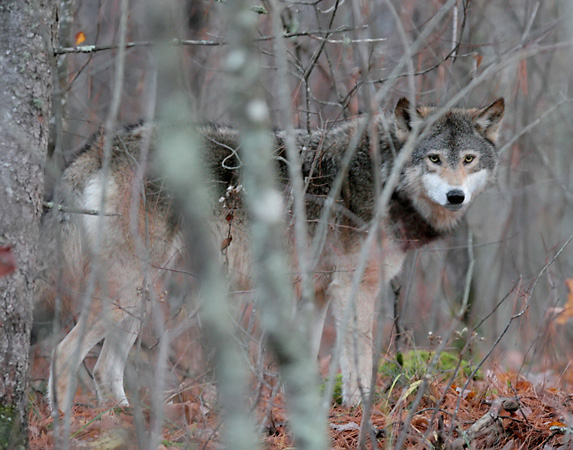    |
| Posted: 03 Jul 2012 10:15 PM PDT On Yellowstone Grizzlies: FWS unfairly dismisses conservation groups and judgesLouisa Wilcox nrdc.com |  I was really bummed to see the recent and sadly misleading Outside magazine article: "Are Hungry Bears in Yellowstone Attacking Humans for Food?," online. They usually have great content, but this piece was trouble all the way from the title, which focuses on a thoroughly debunked (and stale---this stuff happened last summer!) story that just comes off as salacious scare tactics to anyone working on these issues. The article described the last two deaths that occurred last year in the heart of Yellowstone Park, historically heavily occupied grizzly bear habitat. They are sad stories. And, not to blame the victims, they are cautionary tales about how not to behave when encountering grizzlies.Not surprisingly, I take umbrage with a statement by U.S. Fish and Wildlife Service (FWS) Recovery Coordinator Chris Servheen that "[grizzly] recovery is not dependent on environmental groups. And it is not dependant on Federal Judges. It's dependent on what people who live and work in bear country think about grizzlies."It's worth noting that many people who live and work in bear country also work for and support environmental groups…And more importantly, bears have survived because of the federal protections under the Endangered Species Act (ESA), and the constituencies that have supported bears from places all over the country and, indeed, the world.Because persuasive measures to change the behaviors of people who live in and around bear habitat proved ineffective in preventing excessive levels of grizzly mortality, the government was wise to adopt a strong policy such as the ESA in 1975 that provided more coercive programs, and empowered people from other parts of the country and the world to engage in efforts to recover the grizzly bear. Experts agree that but for ESA protections, the Yellowstone grizzly bear would likely have gone extinct. The fact that grizzly bears are still here in Yellowstone is testimony to the strength of the law and the support of people from many places. Bears are a hugely symbolic species of the "wild" and of our nation's first park. The grizzly bear is an animal that resonates with us because of our many common traits; it can stand on its hind legs just like we do; it eats many of the same foods (nuts, fish, meat, members of the carrot family) that we eat; it nurtures its cubs for years, teaching them all they need to know to live in the world—just like us. These common traits help explain why our ancient stories describe bears changing shape to humans, and back again. And they are clever, perhaps too much so. They have a tendency to get into trouble, just like we do. Just as we sympathize with bears, we also feel threatened at times. And big changes in the Greater Yellowstone ecosystem are putting them in situations where they can get in trouble with us, largely by scaring people. And then they often get shot. Uncertainties about the Great Bears' future arise from the loss of a key food, whitebark pine seeds. Loss of whitebark pine is a key reason why human-bear interactions have increased---and why the bears remain on the federal endangered species list.In the Outside story, Dr. Jesse Logan noted the whitebark situation would lead to increased numbers of bears being shot: and that is precisely what we are seeing. In 2008, 2010, and 2011 there were dramatic increases in bear mortalities—increases so large that the population growth rate stalled. (And so far, this year is shaping up to be another high mortality year.) In other words, it is no coincidence that the grizzly bear population has stopped growing during the last 4-5 years, about the same time frame that a major die-off of whitebark pine forests occurred. It is also within the bounds of scientific uncertainty that the population could also be declining. In this world of uncertainty for the grizzly bear, erring on the side of caution is the wise course. That is why federal judges rejected an effort to remove ESA protections for the Yellowstone grizzly bear population last year. The decision sent a message to the government that there is need for additional caution, describing the delisting effort: "a damned-the-torpedoes approach."Servheen also stated that grizzly bear recovery is not dependent on federal judges. Here his comment unilaterally dismisses our hard-earned system of governance: the judiciary is, by design, supposed to oversee the activities of the administrative branch. That is how our system of government was built: it's the balance of powers that makes it effective. If judges find, as they did here, that the decision to delist the Yellowstone grizzly population was irrational and not based on common sense or sound science, it is within the prevue of judges to reverse the government's decision.Instead of ignoring the enormous national and global constituency for the grizzly bear, as well as the federal judiciary, the U.S. Fish and Wildlife Service would be wise to take a step back and reconsider its course. The agency should reflect upon why it is that grizzly bears have survived in the Yellowstone ecosystem during the last 40 years, and what they will need to do to help the bears survive the bumpy roads ahead. Continued ESA protections will help foster the changes that are needed to ensure a healthy future for the Yellowstone grizzly bear.As I wrote in a recent blog, we at NRDC are doing our part by working with ranchers on ways to reduce grizzly/human conflicts, as well as unnecessary mortality. It is time for all of us to work together to expand upon such efforts to keep bears and people alive and safe. Dissing environmental groups and judges is counter-productive. But more egregious, stooping to the lowest common denominator, like Outside has done with their slobbering bear story, fans the flames of the forces that put the bears in danger to begin with, and does the public a serious disservice. I was really bummed to see the recent and sadly misleading Outside magazine article: "Are Hungry Bears in Yellowstone Attacking Humans for Food?," online. They usually have great content, but this piece was trouble all the way from the title, which focuses on a thoroughly debunked (and stale---this stuff happened last summer!) story that just comes off as salacious scare tactics to anyone working on these issues. The article described the last two deaths that occurred last year in the heart of Yellowstone Park, historically heavily occupied grizzly bear habitat. They are sad stories. And, not to blame the victims, they are cautionary tales about how not to behave when encountering grizzlies.Not surprisingly, I take umbrage with a statement by U.S. Fish and Wildlife Service (FWS) Recovery Coordinator Chris Servheen that "[grizzly] recovery is not dependent on environmental groups. And it is not dependant on Federal Judges. It's dependent on what people who live and work in bear country think about grizzlies."It's worth noting that many people who live and work in bear country also work for and support environmental groups…And more importantly, bears have survived because of the federal protections under the Endangered Species Act (ESA), and the constituencies that have supported bears from places all over the country and, indeed, the world.Because persuasive measures to change the behaviors of people who live in and around bear habitat proved ineffective in preventing excessive levels of grizzly mortality, the government was wise to adopt a strong policy such as the ESA in 1975 that provided more coercive programs, and empowered people from other parts of the country and the world to engage in efforts to recover the grizzly bear. Experts agree that but for ESA protections, the Yellowstone grizzly bear would likely have gone extinct. The fact that grizzly bears are still here in Yellowstone is testimony to the strength of the law and the support of people from many places. Bears are a hugely symbolic species of the "wild" and of our nation's first park. The grizzly bear is an animal that resonates with us because of our many common traits; it can stand on its hind legs just like we do; it eats many of the same foods (nuts, fish, meat, members of the carrot family) that we eat; it nurtures its cubs for years, teaching them all they need to know to live in the world—just like us. These common traits help explain why our ancient stories describe bears changing shape to humans, and back again. And they are clever, perhaps too much so. They have a tendency to get into trouble, just like we do. Just as we sympathize with bears, we also feel threatened at times. And big changes in the Greater Yellowstone ecosystem are putting them in situations where they can get in trouble with us, largely by scaring people. And then they often get shot. Uncertainties about the Great Bears' future arise from the loss of a key food, whitebark pine seeds. Loss of whitebark pine is a key reason why human-bear interactions have increased---and why the bears remain on the federal endangered species list.In the Outside story, Dr. Jesse Logan noted the whitebark situation would lead to increased numbers of bears being shot: and that is precisely what we are seeing. In 2008, 2010, and 2011 there were dramatic increases in bear mortalities—increases so large that the population growth rate stalled. (And so far, this year is shaping up to be another high mortality year.) In other words, it is no coincidence that the grizzly bear population has stopped growing during the last 4-5 years, about the same time frame that a major die-off of whitebark pine forests occurred. It is also within the bounds of scientific uncertainty that the population could also be declining. In this world of uncertainty for the grizzly bear, erring on the side of caution is the wise course. That is why federal judges rejected an effort to remove ESA protections for the Yellowstone grizzly bear population last year. The decision sent a message to the government that there is need for additional caution, describing the delisting effort: "a damned-the-torpedoes approach."Servheen also stated that grizzly bear recovery is not dependent on federal judges. Here his comment unilaterally dismisses our hard-earned system of governance: the judiciary is, by design, supposed to oversee the activities of the administrative branch. That is how our system of government was built: it's the balance of powers that makes it effective. If judges find, as they did here, that the decision to delist the Yellowstone grizzly population was irrational and not based on common sense or sound science, it is within the prevue of judges to reverse the government's decision.Instead of ignoring the enormous national and global constituency for the grizzly bear, as well as the federal judiciary, the U.S. Fish and Wildlife Service would be wise to take a step back and reconsider its course. The agency should reflect upon why it is that grizzly bears have survived in the Yellowstone ecosystem during the last 40 years, and what they will need to do to help the bears survive the bumpy roads ahead. Continued ESA protections will help foster the changes that are needed to ensure a healthy future for the Yellowstone grizzly bear.As I wrote in a recent blog, we at NRDC are doing our part by working with ranchers on ways to reduce grizzly/human conflicts, as well as unnecessary mortality. It is time for all of us to work together to expand upon such efforts to keep bears and people alive and safe. Dissing environmental groups and judges is counter-productive. But more egregious, stooping to the lowest common denominator, like Outside has done with their slobbering bear story, fans the flames of the forces that put the bears in danger to begin with, and does the public a serious disservice. |
| Posted: 03 Jul 2012 10:16 PM PDT Assembly committee approves bill banning use of dogs in hunting bears sacbee.com A controversial bill that would ban dogs from being used to hunt bobcats and bears in California made it out of one Assembly committee today on its second try, but still faces fierce opposition from the California Houndsmen for Conservation.About 200 opponents gathered at the Capitol today to urge members of the Assembly Water, Parks and Wildlife Committee to vote against Senate Bill 1221 by Sen. Ted Lieu, D-Torrance. It passed 8-4, and now heads to the Assembly Appropriations CommitteeHounds have treed a black bear   |


| You are subscribed to email updates from Wolves, Wolf Facts, Cougars, Cougar Facts, Coyotes, Coyote Facts - Wolves, Cougars, Coyotes Forever To stop receiving these emails, you may unsubscribe now. | Email delivery powered by Google |
| Google Inc., 20 West Kinzie, Chicago IL USA 60610 | |


No comments:
Post a Comment